Mold Remediation Process: From Inspection to Clearance Testing
Discovering mold in your home can be an alarming experience. Beyond unsightly stains and musty odors, mold poses significant risks to your property’s structural integrity and your family’s health. Effective mold removal is not a simple cleaning task; it is a precise science that requires professional expertise, specialized equipment, and a rigorous process to ensure the environment is safe and truly mold-free. This comprehensive guide from Rapid Response Restoration will walk you through the critical steps of the professional mold remediation process, from the initial inspection all the way to the final clearance testing.
The Importance of Professional Mold Remediation
Mold is a resilient fungus that reproduces through microscopic spores that travel through the air. DIY mold cleanup often disturbs these spores, spreading them to previously unaffected areas and exacerbating the problem. Furthermore, improper cleaning can leave moisture behind, allowing mold to regrow quickly. Professional mold remediation, performed by certified experts like those at Rapid Response Restoration, addresses not only the visible mold but also the underlying moisture source and the hidden spores, ensuring a complete and lasting solution that protects your investment and your health.
Step One: Initial Mold Inspection and Damage Assessment
The remediation process begins with a thorough inspection and assessment. Our certified technicians at Rapid Response Restoration conduct a detailed visual inspection of the property to identify all visible signs of mold growth. However, since mold often thrives in hidden areas like behind walls or under flooring, we utilize advanced technology such as moisture meters, thermal imaging cameras, and borescopes to detect hidden moisture and mold colonies. This non-invasive investigation allows us to pinpoint the exact extent of the infestation and the source of the moisture that is feeding it. We also perform air quality testing and surface sampling to identify the types and concentrations of mold spores present, which helps in crafting the appropriate remediation strategy.
Step Two: Creating Containment and Engineering Controls
To prevent the cross-contamination of mold spores to clean areas of your home during the remediation process, we establish strict containment barriers. This involves sealing off the affected area using heavy-duty polyethylene sheeting and creating a negative air pressure environment with specialized air filtration devices. These HEPA-filtered air scrubbers and negative air machines continuously capture airborne mold spores, ensuring they are not released into your home’s ventilation system or other living spaces. This critical step demonstrates the core difference between professional remediation and amateur attempts, safeguarding the health of our technicians and your family.
Step Three: Mold Removal and Antimicrobial Application
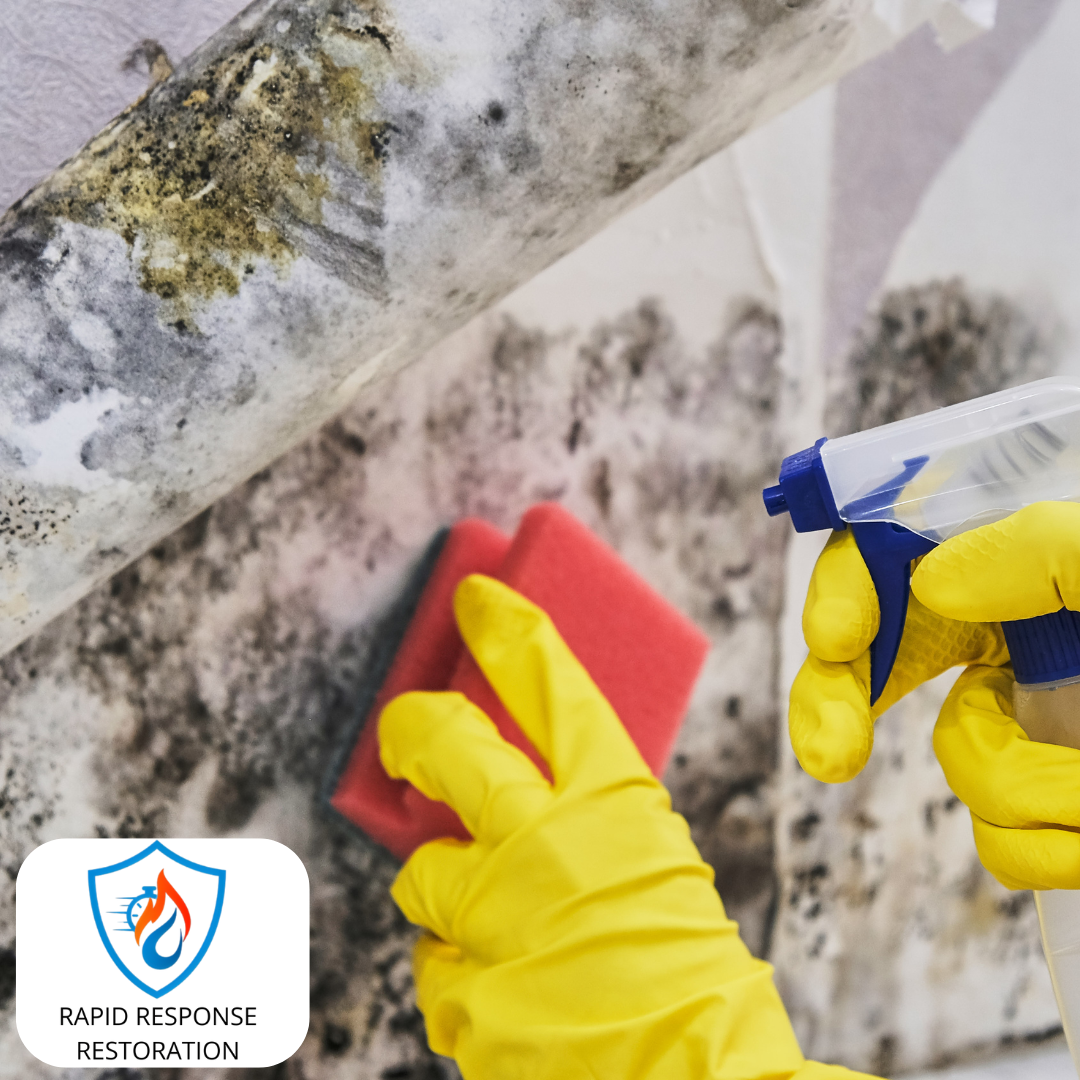
With containment securely in place, the actual mold removal begins. The specific techniques used by Rapid Response Restoration technicians depend on the surface and the extent of the growth. Non-porous and semi-porous materials are often cleaned using HEPA vacuuming and damp wiping with EPA-approved antifungal and antimicrobial agents. Heavily contaminated porous materials, such as drywall, insulation, and carpeting, typically require careful removal and disposal, as they cannot be adequately cleaned. All removed materials are bagged and sealed before being transported out of the containment zone for disposal. After physical removal, all affected areas are treated with antimicrobial solutions to eliminate any remaining microscopic spores and to inhibit future growth.
Step Four: Cleaning and Sanitizing of Belongings and Contents
Mold spores can settle on and contaminate personal belongings within the affected area. Rapid Response Restoration offers professional content cleaning services to restore your valuables. Using techniques like HEPA vacuuming, dry cleaning, and wet cleaning, we meticulously clean and sanitize items such as furniture, curtains, clothing, and other personal effects. For items that require more delicate handling, we can utilize off-site ozone treatment and ultrasonic cleaning tanks to ensure they are returned to you free of mold and odor.
Step Five: Drying and Dehumidification of the Affected Area
Since moisture is the root cause of all mold growth, simply removing the mold without addressing the water problem is futile. After the cleaning process is complete, the area must be thoroughly dried. We use industrial-grade dehumidifiers and high-speed air movers to eliminate all residual moisture from the air and building materials. Our technicians meticulously monitor the drying process with moisture meters to ensure that humidity levels and moisture content in materials return to standard drying goals, creating an environment where mold cannot regrow.
Step Six: Post-Remediation Verification and Clearance Testing
The final and most crucial step in the mold remediation process is verification that the project has been successful. This is not merely a visual check; it is a scientific assessment. After the containment barriers are removed and the area is fully reconstructed, an independent, third-party certified mold inspector is often hired to perform post-remediation verification testing. This involves taking air and surface samples inside the contained area and comparing them to samples from a control area outside the home. The project is only considered complete when these clearance test results confirm that the mold spore count inside the remediated area is at or below the level found outdoors, indicating a normal fungal ecology. Rapid Response Restoration stands behind our work and ensures your home meets these stringent standards for health and safety.
Why Choosing a Certified Mold Remediation Company is Critical
Mold remediation is a complex process governed by industry standards set by the IICRC. Attempting to handle it yourself or hiring an uncertified contractor can lead to incomplete removal, recurring problems, and health risks. Rapid Response Restoration employs IICRC-certified mold remediation specialists who are trained in the latest protocols and equipped with the most advanced technology. We provide a guaranteed solution, detailed documentation for your insurance company, and, most importantly, the peace of mind that your home is safe for you and your family.
Trust Rapid Response Restoration for Complete Mold Remediation
If you suspect or have confirmed mold growth in your home, do not hesitate to contact the professionals. The team at Rapid Response Restoration is available around the clock to provide a comprehensive inspection and a clear, effective plan for remediation. We guide you through the entire process, from initial testing to final clearance, ensuring your home is restored to a clean, healthy, and mold-free condition. Contact us today for a consultation and take the first step toward reclaiming your space.

Leave A Comment